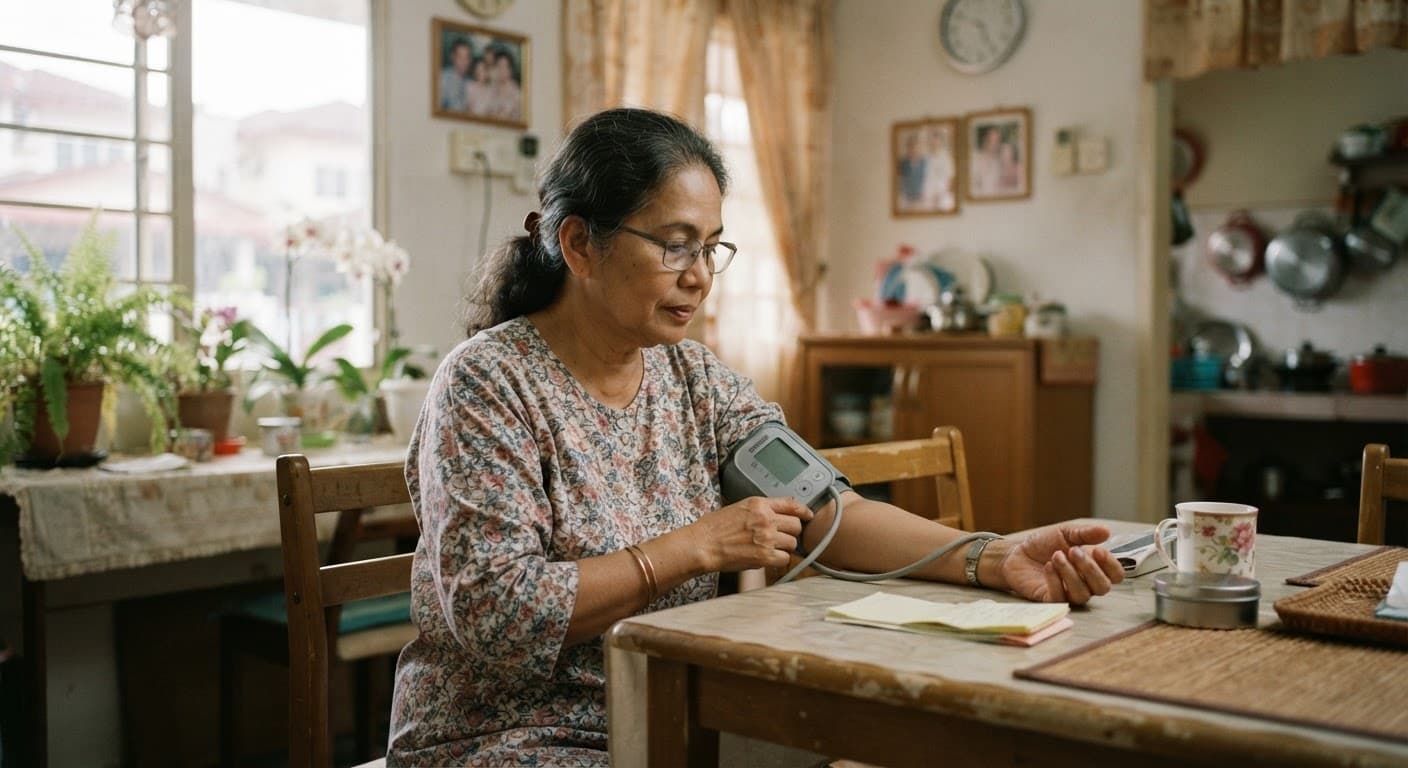
I bought a home blood pressure monitor after my first high reading at a clinic, and for two years I used it wrongly. The numbers were always a little alarming, which was worrying but not useful. It took a nurse at my Klinik Kesihatan about ten minutes to show me what I was doing wrong, and the readings settled down immediately.
The three mistakes that ruin the reading
- Cuff size. A cuff that is too small reads high — sometimes 10 to 15 mmHg high. Measure your upper arm circumference and match it to the cuff range printed on the box. This was my mistake, and it made every reading look worse than it was.
- Arm position. The cuff must sit at heart level, supported on a table, with your back against the chair and feet flat. A cuff on a lap or an unsupported arm reads high.
- Timing. Taking a reading immediately after coffee, a cigarette, a phone argument or a brisk walk gives you a number that tells you nothing about your usual pressure.
Upper-arm monitors with a manual cuff are more reliable than wrist models for most people. Wrist monitors are sensitive to position, and when I compared mine against the clinic's reading it was consistently off. If you already own one, take it to your clinic and check it against theirs before you trust a single number it gives you.
Seven days of readings taken the same way beats a single clinic number every time — and it often reveals that your pressure is fine at home and high only in the clinic.
Read next
- The health screenings actually worth paying for after 50
What the public system does well, and what is worth paying for.
- More in Health
Every screening, clinic and prevention piece in one place.