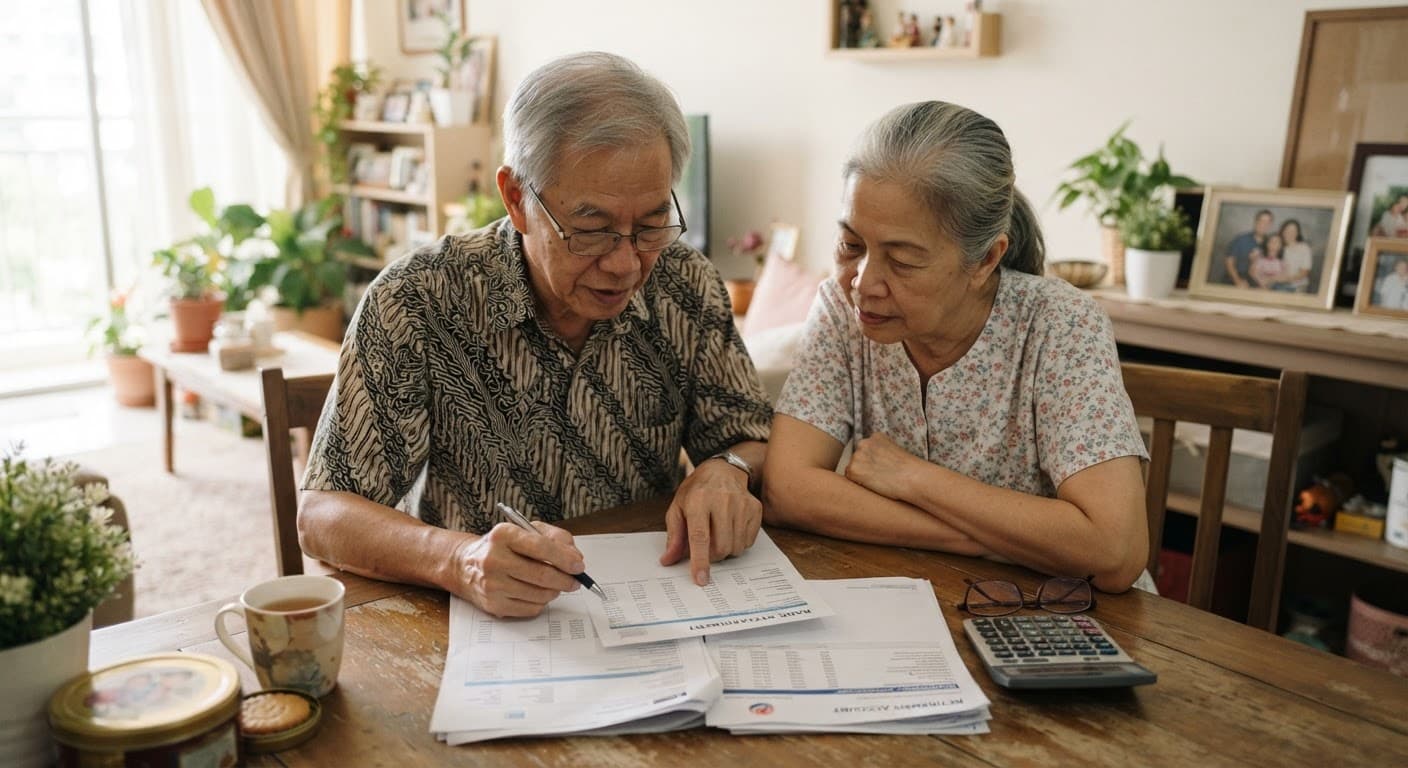
A pension pays you every month until you die. A lump sum does not. Most Malaysian households retire with the second, which means the income you live on after 55 is something you have to produce yourself, month after month, from a pot that has no opinion about how long you will need it.
The difference between a pension and a pot
With a pension the risk that you live a long time is carried by someone else. With a pot it is carried by you, and it shows up as a single question: how much can I safely take each month without the balance falling faster than it grows. Get that figure roughly right and the money works. Get it wrong in either direction and you either run short or spend years being needlessly anxious.
Pick a monthly figure and hold it
The instinct after a lifetime of saving is to keep the money intact and spend as little as possible, then to overspend the moment something goes wrong. Both are common. A fixed monthly figure, reviewed annually rather than weekly, removes the daily negotiation with yourself and makes the money easier to live on.
The withdrawal most people regret
A large early withdrawal to help a family member, or to settle a debt, is the one that most often changes the arithmetic permanently. It is not that these draws are wrong — often they are generous and necessary. It is that they are made from the pot without changing the monthly figure, so the plan quietly stops working in year eight instead of year twenty.
The pot can survive any single year of spending. What it cannot survive is being treated as both a monthly income and an emergency fund, with no line drawn between the two.
Questions readers ask
- Should I leave the money in EPF and draw monthly?
- Many members do, because the balance left in continues to earn an annual dividend and the monthly transfer removes the temptation to spend a large sum at once. The trade-off is access: withdrawing to meet an unexpected cost takes time. A common approach is to leave most in and keep a year of income in a separate account for exactly that reason.
- What if the dividend falls?
- Treat it as a signal to review, not to panic. Work out what the lower return does to a twenty-year draw and whether the monthly figure still holds. If it does, change nothing. If it does not, the adjustment is usually a small reduction now rather than a large one later, which is why reviewing annually beats reviewing daily.
- When should I cut back?
- When the balance has fallen by more than your plan allowed for, or when a care cost has been added that the plan never included. Cut the discretionary line first — travel, gifts, the second car — rather than the money you spend on food and health, which costs more to reduce than it saves.
Read next
- How much you actually need to retire in Malaysia
Building the target figure your monthly draw comes from.
- EPF withdrawal options at 55, 60 and beyond
The structure the monthly figure sits inside.
- More in Money
Retirement income, care costs and the legal side for the decade after 55.