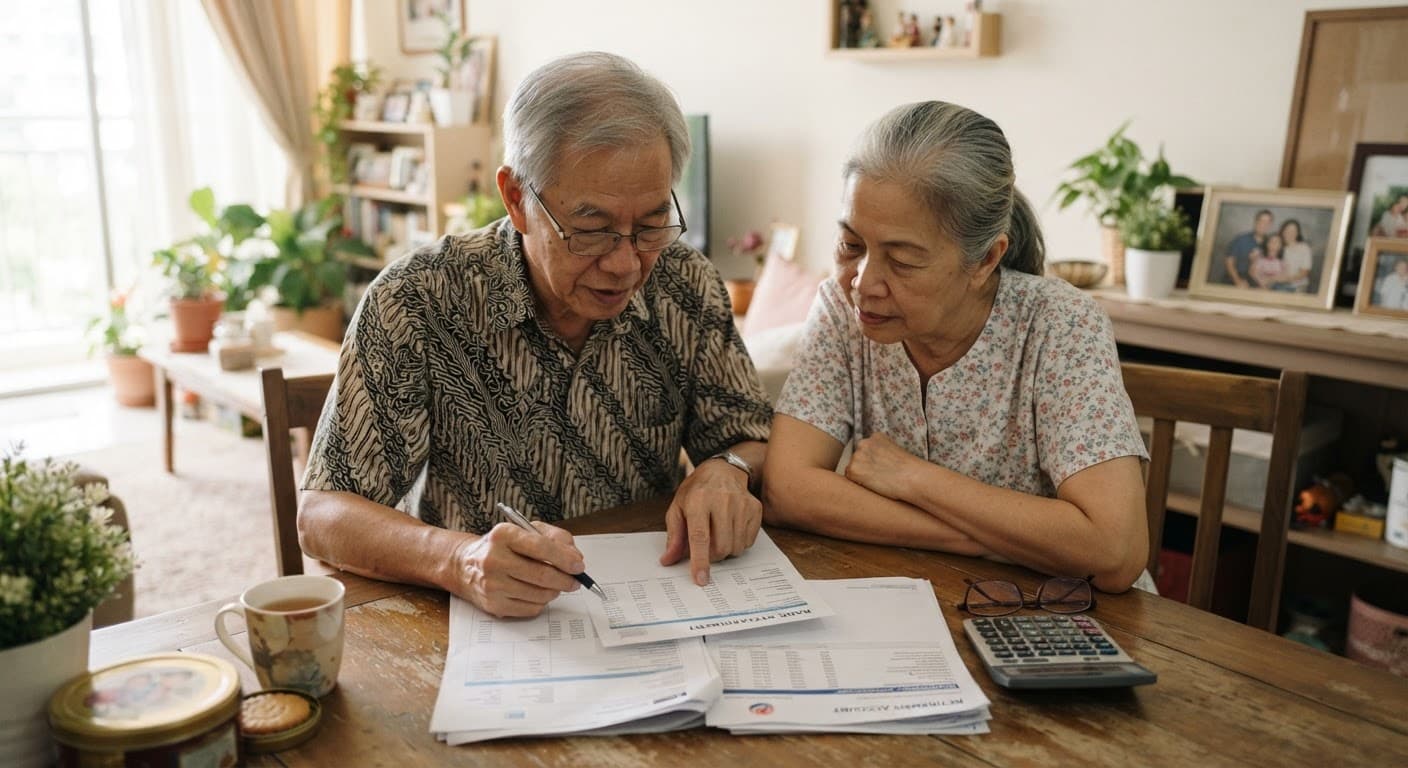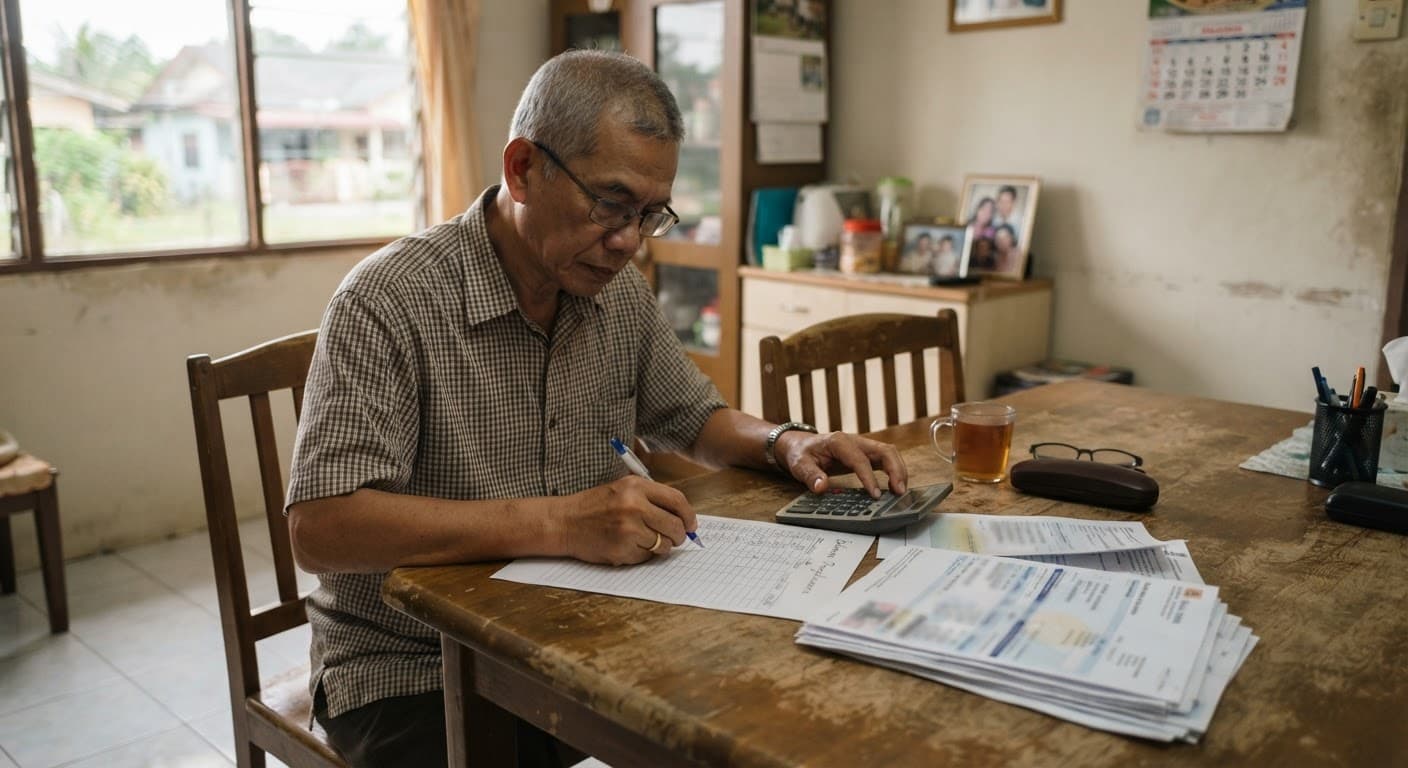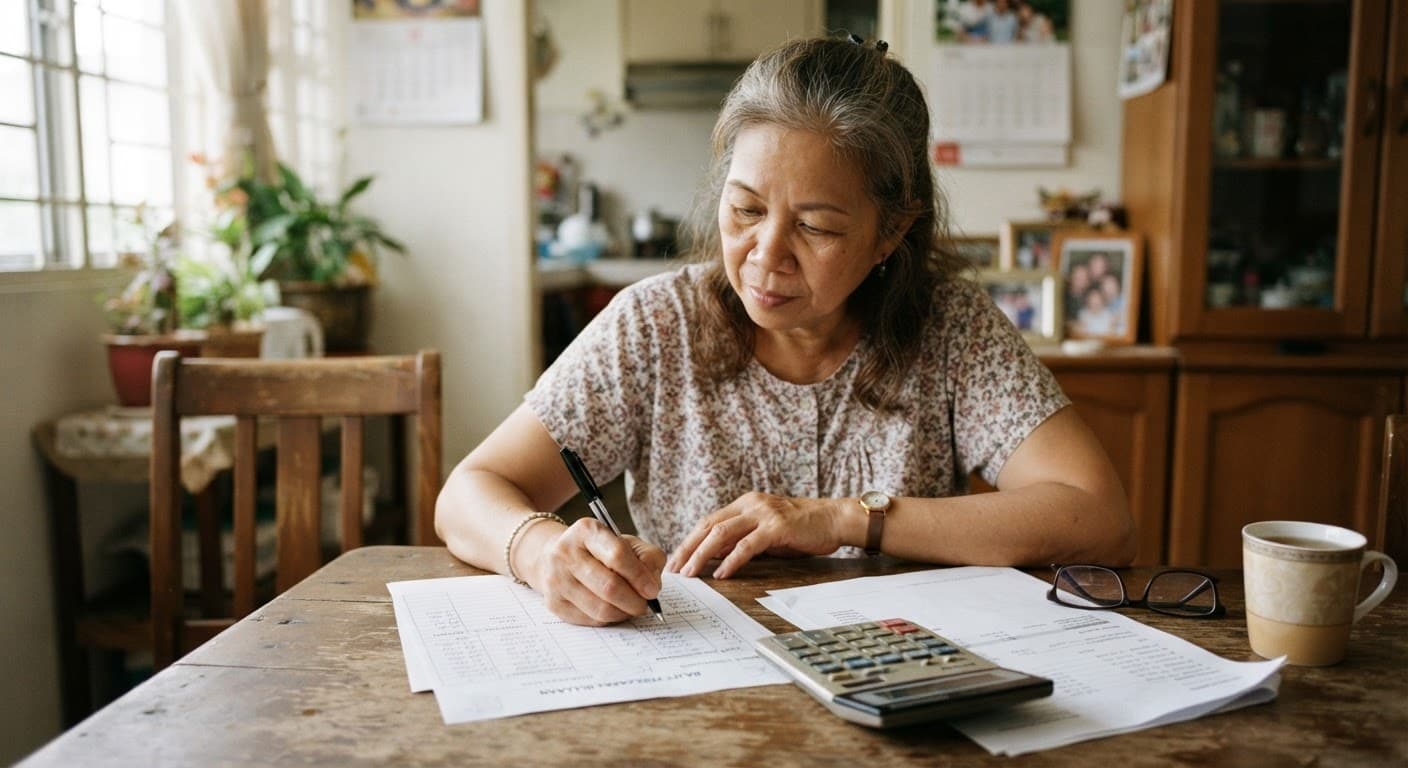
Ask five people how much you need to retire in Malaysia and you will hear five numbers, usually between RM900,000 and RM1.5 million, usually quoted with confidence. Almost none of them come from a calculation the person did themselves. They come from a rule of thumb, and the rule of thumb has assumptions built into it that may not match your household.
Where the headline figure comes from
The common method multiplies your annual spending by twenty or twenty-five — the idea being that a pot of that size, drawn down carefully and still earning something, lasts around twenty to thirty years. The maths is sound. The problem is the input: most people estimate their annual spending from memory, and memory understates it, because the irregular costs do not come to mind.
Start from a monthly spend you can defend
Take three months of actual bank and card statements and total what left your household. Then add the costs that fall outside those months — road tax and insurance, medical premiums, festivals and travel, home repairs, and any help you give to family. That annual figure is your real starting point, not the number you half-remember.
| Household tier | Monthly | Annual | Twenty-year pot |
|---|---|---|---|
| Basic — all housing costs covered, modest spending | RM2,500 | RM30,000 | RM600,000 |
| Comfortable — own home, a car, occasional travel | RM4,500 | RM54,000 | RM1,080,000 |
| Comfortable plus routine paid help | RM6,500 | RM78,000 | RM1,560,000 |
Build your own number in four steps
First, settle your real annual spend from statements. Second, decide how many years it needs to cover — plan to 90 rather than to life expectancy, because the cost of being wrong at the end is worse than the cost of being cautious now. Third, subtract any guaranteed income: EPF drawdown, a pension, rental. Fourth, add a single care scenario, because the probability of some paid care is high enough that leaving it out is the mistake.
The scenario almost everyone omits
Model one period of residential care. At RM4,000 a month, two years is RM96,000. That single line changes the target more than any market-return assumption, and it is the cost most likely to arrive in the years when you can least respond by going back to work.
The target is not a score to reach. It is the monthly amount you can draw without flinching, held against a cost you may one day have to meet.
Questions readers ask
- Is RM1 million enough?
- It depends entirely on what it has to cover. RM1 million alongside a paid-off home and a modest monthly spend is comfortable. The same amount with rent to pay, private medical premiums rising each year and no family nearby is thin — and if two years of residential care has to come out of it, thinner still. The figure is meaningless without the monthly draw and the care scenario attached.
- Should I include my home in the number?
- Only if you are genuinely prepared to sell or downsize. Many households hold the house as an unspoken reserve and then never touch it, which is fine — but then it is not part of the retirement pot, and the cash figure has to stand on its own. Decide which one it is, and plan against that.
- How do I allow for inflation?
- Rather than picking a precise rate, stress-test. Re-run your annual spend with everything 40 per cent higher and see whether the pot and the monthly draw still work. If the answer is yes, the plan has room. If it only works at today's prices, the plan depends on inflation being gentle for twenty years, which is a bet rather than a plan.
Read next
- Making the money last when there is no pension
Drawdown discipline once the lump sum is in hand.
- The real monthly cost of care in Malaysia, by state
The cost line most retirement figures leave out.
- More in Money
Retirement income, care costs and the legal side for the decade after 55.