Most people watching their salt are careful with the salt shaker and generous with everything around it. In a Malaysian kitchen, the shaker is the smallest source on the counter. The seasoning arrives in the bottle, the jar and the packet.
The big four
| Source | Why it adds up |
|---|---|
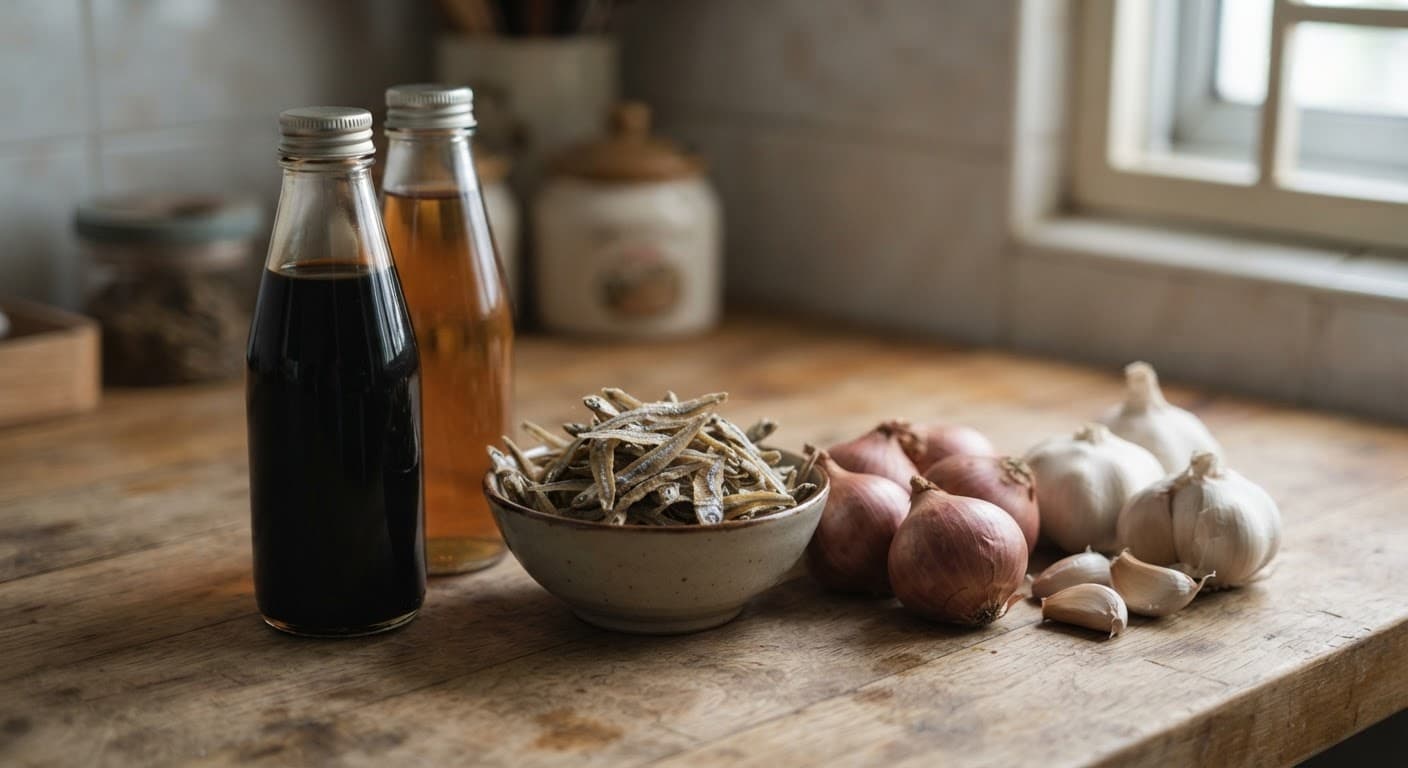
| Soy sauce and dark soy | A single tablespoon carries a substantial share of a day's recommended intake |
| Chilli, belacan and shrimp pastes | Seasoned twice over, and used generously |
| Dried anchovies and salted fish | Salt is the preservation method, not an ingredient |
| Stock cubes and instant seasonings | In almost every home stir-fry without anyone counting it |
- Taste before adding soy, not after — most dishes need less than the hand reaches for
- Swap half the soy for a squeeze of lime and more garlic and shallot
- Rinse salted fish and dried anchovies briefly and pat dry before cooking
- Use fresh stock from bones or vegetables where a cube would otherwise go in
- Read the label on pastes: sodium per 100g, and compare two jars side by side
You cannot taste your way to a low-salt kitchen. The palate adapts in about three weeks if you cut gradually, and then the old levels taste overwhelming.
Cut gradually, not all at once
Reducing salt by a quarter each fortnight is far more likely to stick than a sudden switch, because the palate genuinely re-calibrates within three weeks. Keep the acid — lime, tamarind, vinegar — and the aromatics generous, and season with those while the salt comes down. If you take blood-pressure medication or have kidney disease, ask your doctor to set your own target rather than following a general figure.
Questions readers ask
- Is fish sauce or soy sauce better?
- Neither is inherently a lower-salt choice — both are concentrated salt with flavour, and the sodium per tablespoon varies more between brands than between the two types. Read the labels and compare sodium per 100ml, then use less of whichever you keep. The goal is total sodium across the day, not picking a winner between two similar bottles.
- Does cutting salt mean bland food?
- Not if you replace it rather than just remove it. Acid from lime, tamarind and vinegar, heat from fresh chilli and ginger, and aroma from shallot and lemongrass all do work that salt was doing. Cut the salt by a quarter at a time over a few weeks and the palate adjusts; cut it overnight and every meal tastes like nothing for a month.
Read next
- Cooking for one after a lifetime of cooking for five
Scaling a lifetime of recipes down to one person.
- More in Food
Malaysian cooking, adapted for the conditions that arrive with age.