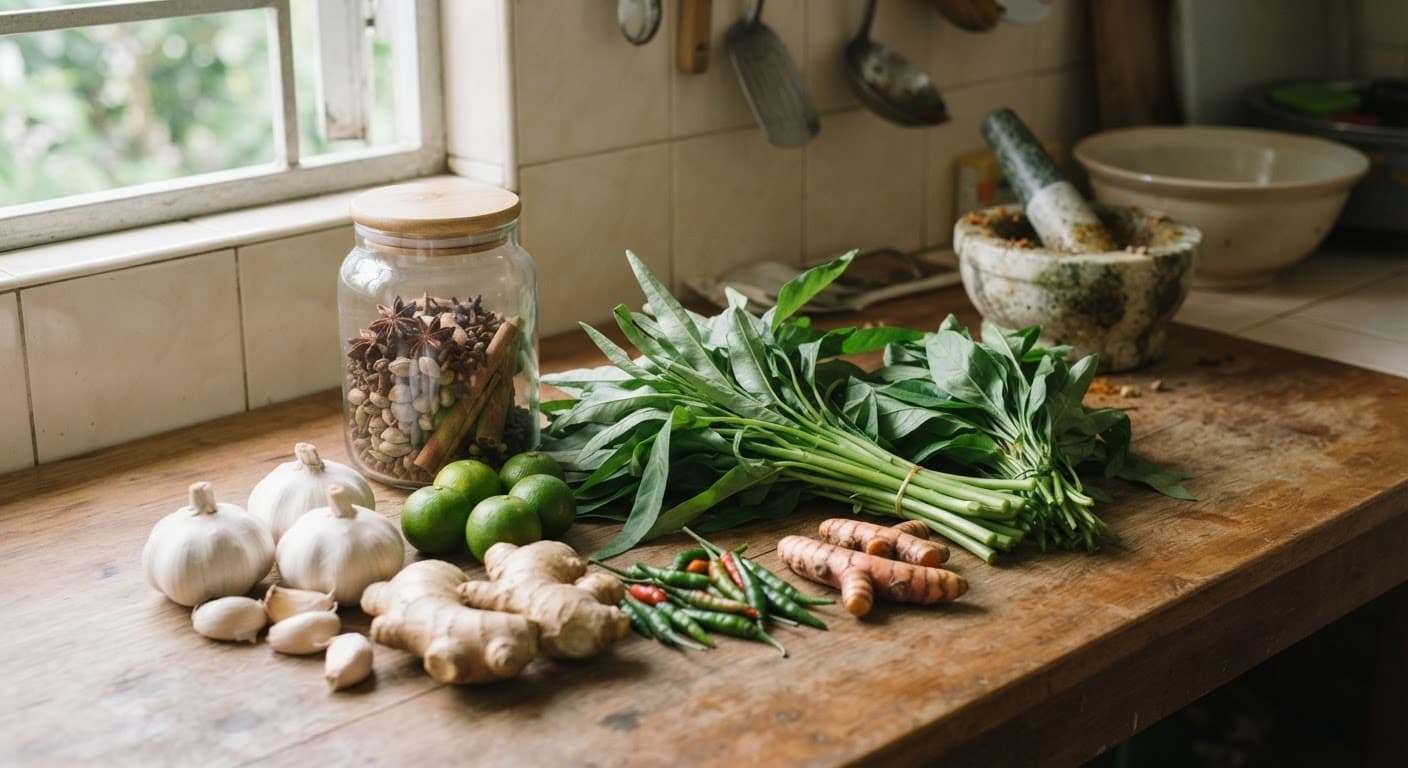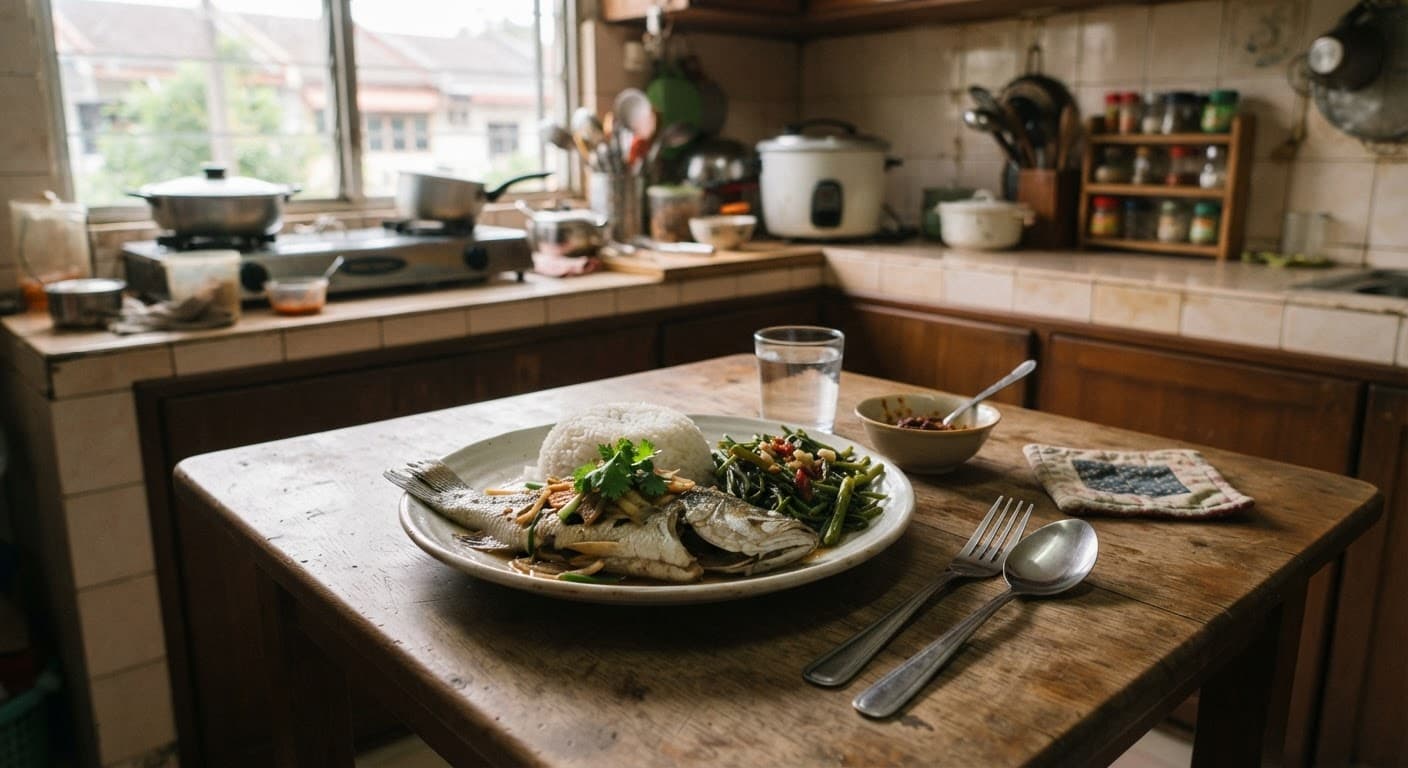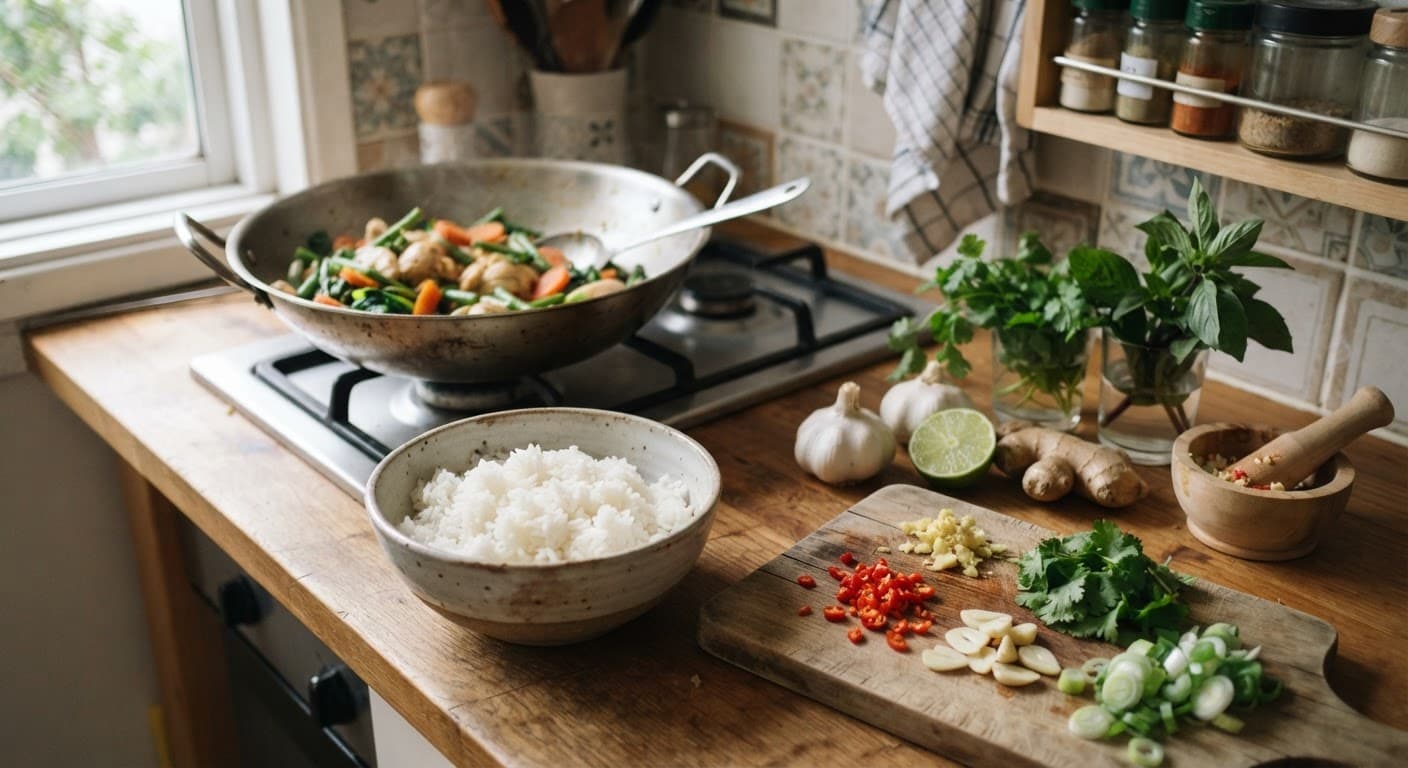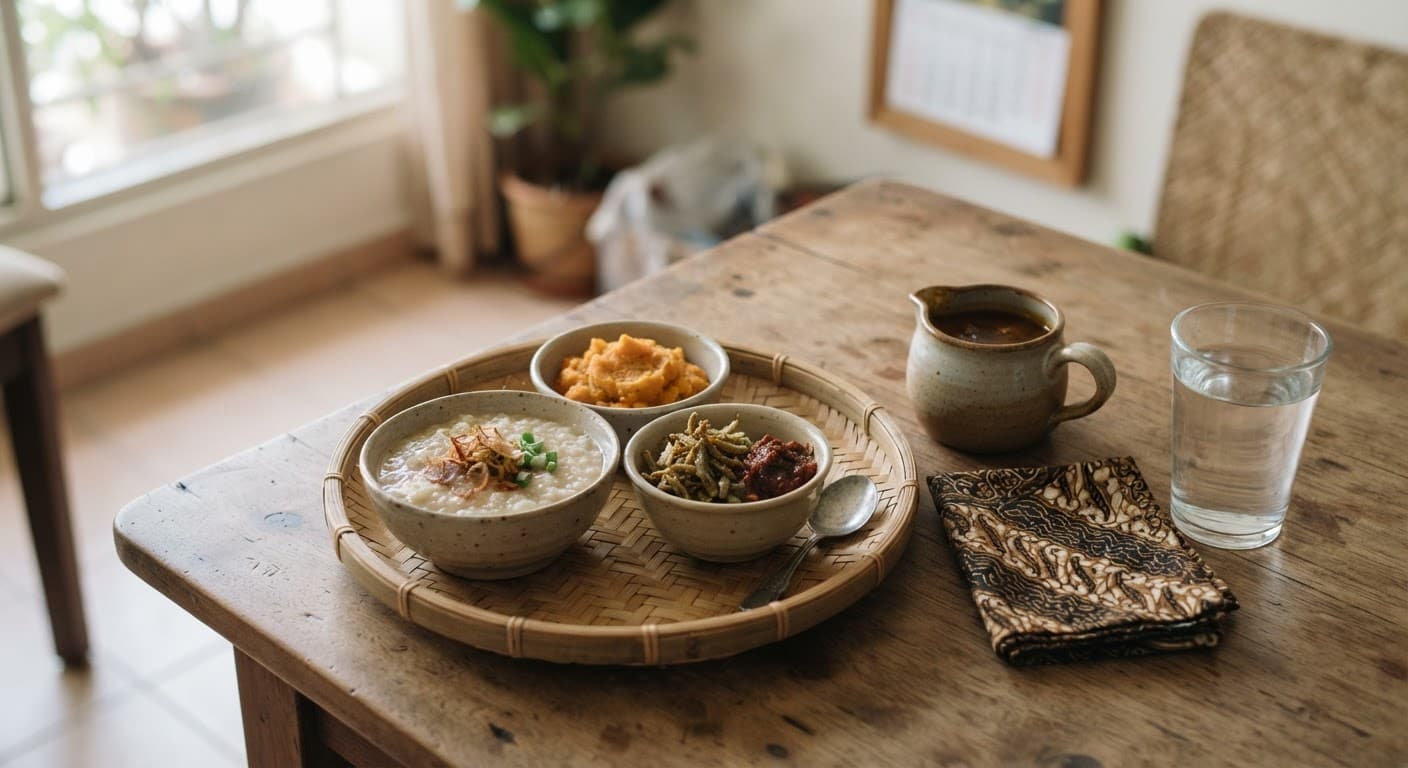
A person who cannot swallow safely is not simply being difficult about food. The swallow is the part that broke, and it takes time to recover. The cooking problem is real, and it has a better answer than a blender and a shrug.
Where the flavour goes
Soft food fails when the texture is right and the taste is washed out. The fix is to build the flavour before the texture: a good stock, a sauce that carries the seasoning, and a garnish. A blended fish curry with the broth kept thick and sharp tastes of something. The same fish blended plain tastes of nothing, and appetite falls accordingly.
- Cook the dish properly first, then adjust the texture — never the other way round
- Keep the gravy or sauce separate and pour at the table, so the food is not a puddle when served
- Use soup bases cooked with ginger, garlic and bones to add depth without needing to chew
- Add soft-cooked vegetables separately rather than blending everything together
- Serve small and often, and at the temperature it is meant to be — lukewarm food is unappetising at any age
Dishes that work
Congee with minced pork and ginger. Steamed egg with minced chicken. Braised fish with a soft tofu base. Pumpkin or sweet potato soup with a chicken stock. Mashed potatoes with gravy that has been cooked down. None of these exists only for someone with a swallow difficulty — they are ordinary dishes that happen to work, which is exactly why they get eaten.
Texture is a clinical decision. Flavour is the family's job, and it is the part that decides whether the food gets eaten at all.
Questions readers ask
- Can I thicken drinks at home?
- Only to the consistency your speech therapist has specified, and using a commercial thickener rather than cornflour or gelatine, which thicken inconsistently and can change in the mouth. Thin liquids are the most common cause of aspiration, and thickened fluids are a clinical decision rather than a kitchen one. Ask the therapist which level applies and how to test it.
- How do I stop meals becoming depressing?
- Serve them the way you would serve anyone: on a proper plate, warm, with a garnish, and at the family table where they can manage it. Small plates more often beats one large plate that defeats them. Food that looks like it was made for a person rather than for a condition is eaten with more appetite, and nutrition follows appetite.
Read next
- Meals after a hospital stay: the first two weeks home
What to have in the house before the patient arrives.
- More in Food
Malaysian cooking, adapted for the conditions that arrive with age.