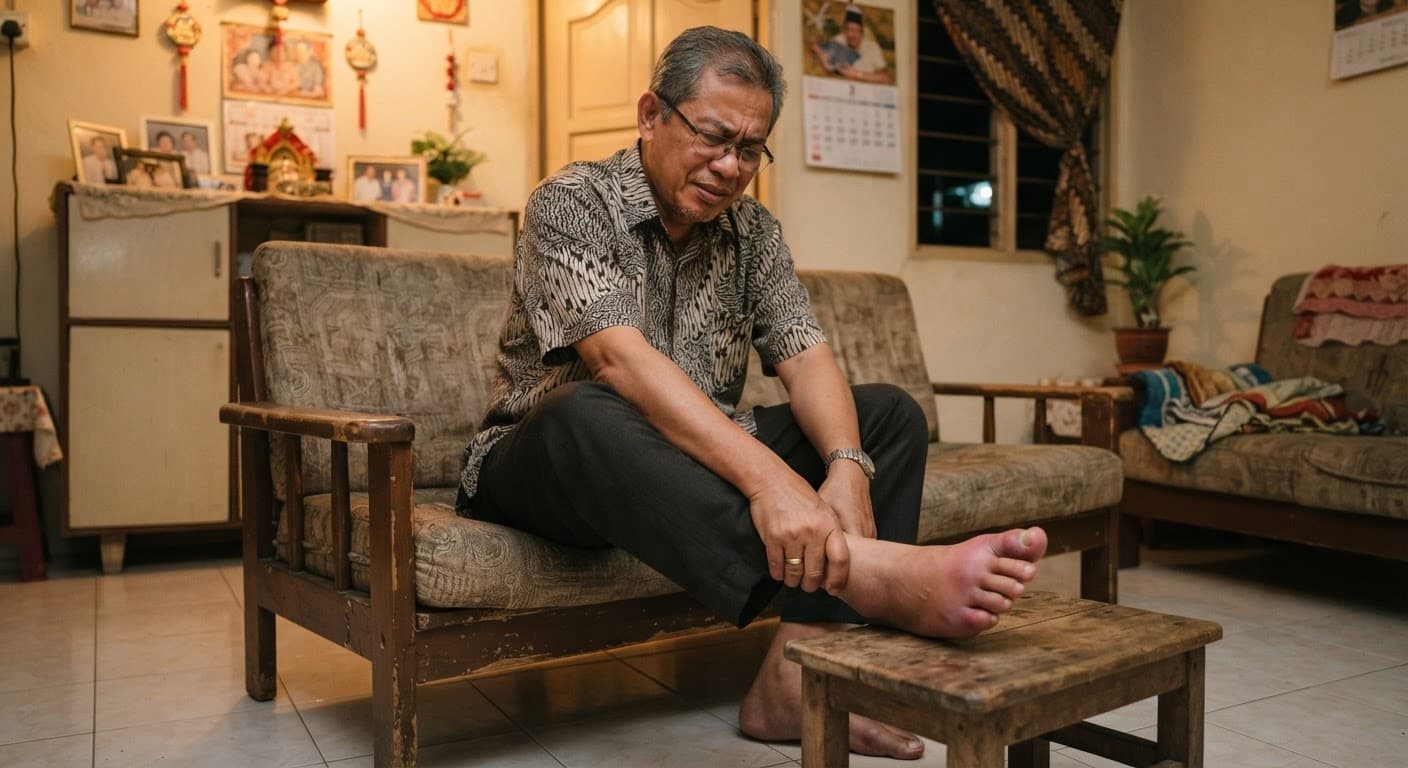
The first attack woke me at 3am and I could not put the sheet on my foot. The joint at the base of the big toe was red, hot and swollen, and I thought I had stepped on something. It was gout, and for the next two years I treated it as a problem I could solve by avoiding prawns. That is not how it works, and once I understood why, the attacks finally spaced out.
I am a civil servant, not a clinician. What follows is what I learned managing my own gout in Malaysia, and the conversations with my doctor that changed how I handle it.
Why the big toe goes first
Gout happens when uric acid in the blood forms sharp crystals that settle in a joint. Uric acid is a normal waste product, but when the level runs high — from diet, genetics, kidney handling, some medicines, or simply how your body is built — the crystals gather in the coolest, most peripheral joints. The big toe is the classic site, which is why so many attacks arrive overnight in the same spot. It can also hit the ankle, knee, wrist or elbow.
The triggers that show up on a Malaysian table
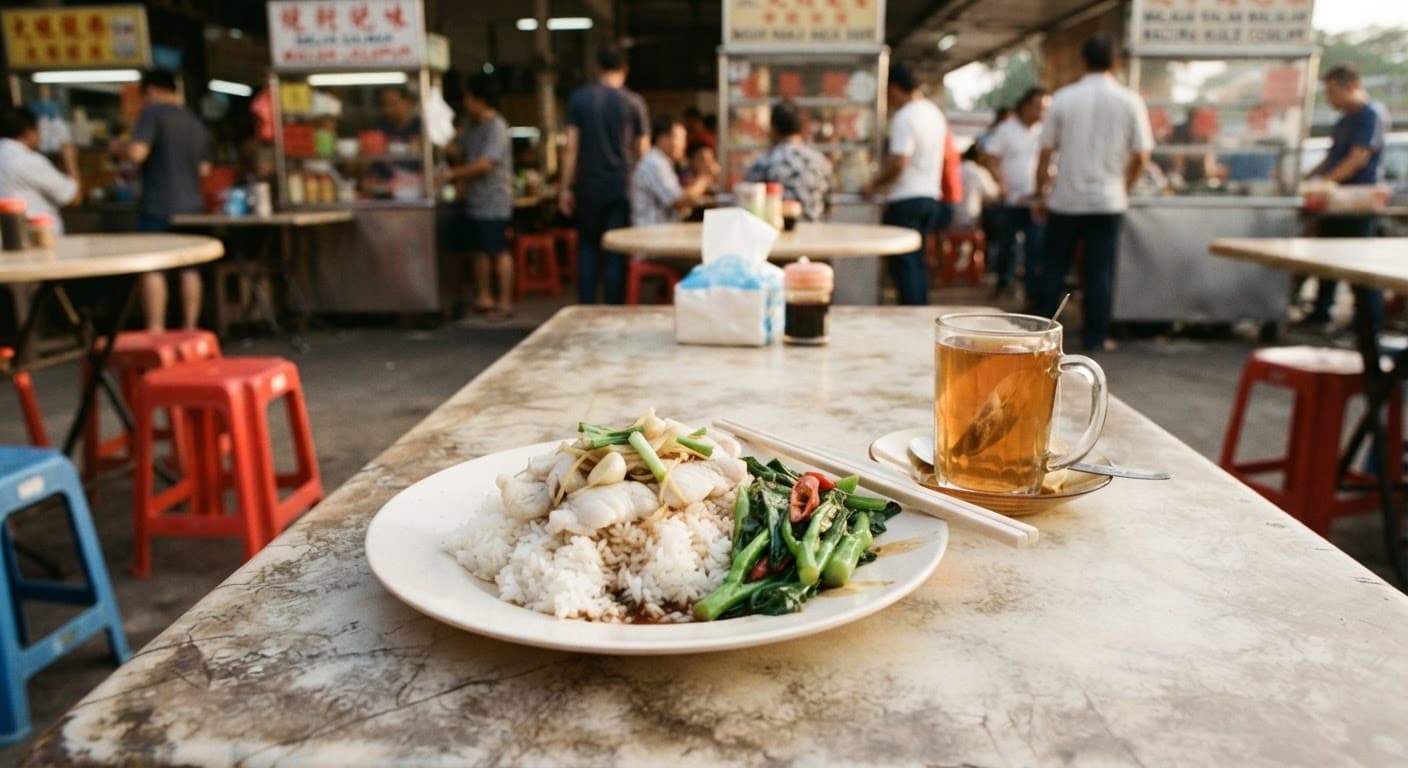
Diet is not the whole story, but on our table the culprits are specific. My attacks were worst in the weeks after a seafood dinner, a run of late nights with beer, and a stretch of not drinking enough water in hot weather. Fried chicken and sweet drinks mattered more than I expected.
| Food or drink | Why it matters | What I do now |
|---|---|---|
| Prawns, cockles, shellfish | Very high in purines, which raise uric acid | Occasional, and never alongside beer |
| Organ meats, liver, intestines | Among the highest purine sources | Avoid, not just reduce |
| Ikan bilis, sardines, anchovies | Common in everyday Malaysian cooking | Keep to small portions |
| Beer and stout | Raises uric acid and slows its removal | Rare, and always with water |
| Sweet drinks, cordials, canned | Fructose raises uric acid | Swap for plain water or tea |
| Red meat in large portions | Purine load rises with the portion | Smaller servings, more vegetables |
| Dehydration | Concentrates uric acid in the blood | Water through the day, more in hot weather |
A trigger list, not a ban list
The mistake I made was treating this as a list of foods I could never eat again. That lasted a few weeks and then collapsed. What worked was knowing which items carried the most risk, cutting those hardest, and being sensible about the rest. If I am going to a seafood dinner, I drink water before and after, skip the beer, and do not repeat it the next day.
What actually helps between attacks
- Water, and enough of it — this was the single biggest change for me
- Steady weight, not crash dieting, which can itself trigger an attack
- Less alcohol, especially beer
- Reviewing medicines — some diuretics and other drugs can raise uric acid, so ask your doctor rather than stopping anything yourself
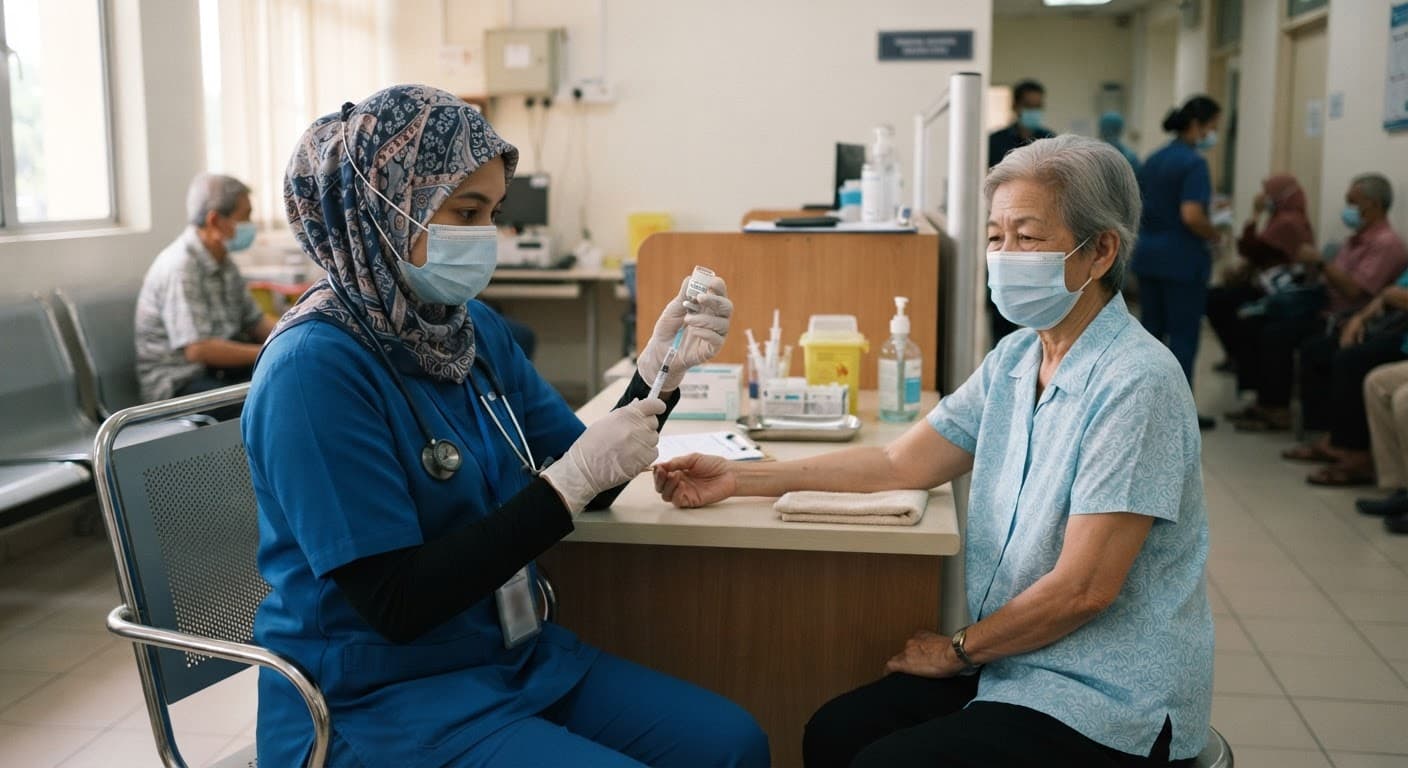
- Treating the condition, not just the flare — urate-lowering medication is often what stops attacks recurring, and it is a conversation to have with your doctor
One myth worth clearing: you do not stop urate-lowering medication during a flare. That is a decision for your doctor, and doing it on your own can make the attack longer. When a flare starts, the job is to rest the joint, keep drinking, and get the treatment your doctor has agreed with you.
For two years I tried to eat my way out of gout. What finally worked was treating it as a condition I manage with my doctor, and letting the food changes support that rather than replace it.
Read next
- Looking after your kidneys when you have diabetes
Why kidney handling and joint conditions are linked.
- Traditional tonics and supplements that clash with your prescriptions
What to check before adding anything to the medicine cabinet.
- More in Health
Every condition, screening and prevention piece in one place.
Questions readers ask
- Does cutting purines alone stop gout?
- Rarely on its own. Diet can lower uric acid somewhat, but for many people the level stays high enough to keep forming crystals. Most people who flare repeatedly need medication to bring the uric acid down, alongside sensible eating. Ask your doctor what applies to you.
- Can I exercise with gout?
- Yes, gently, and staying active helps with weight and joint health. Rest the joint that is flaring, avoid putting load on it while it is hot and swollen, and drink more water when you are active in hot weather.